

Stem Cells. This is a quack cure that is not talked about as much as it should be.
Any clinic offering stem cell therapies not authorized by the FDA or your regulatory agency is selling unproven and potentially dangerous treatments.
Stem cell therapy and research are only approved for the treatment of
- Specific cancers
2. Receding gums
3. Carriage degeneration
4. spinal muscular atrophy
While hiking with my dog today, I was sent this:
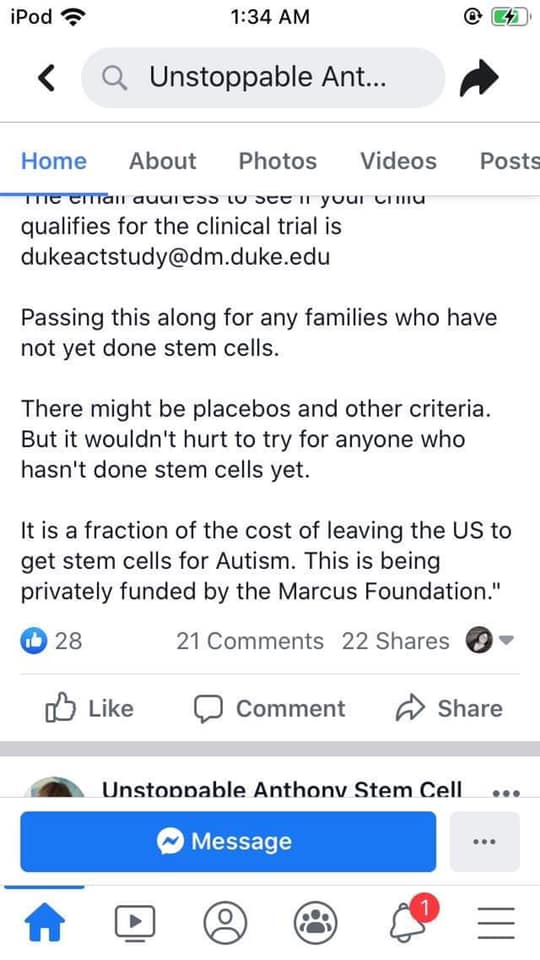
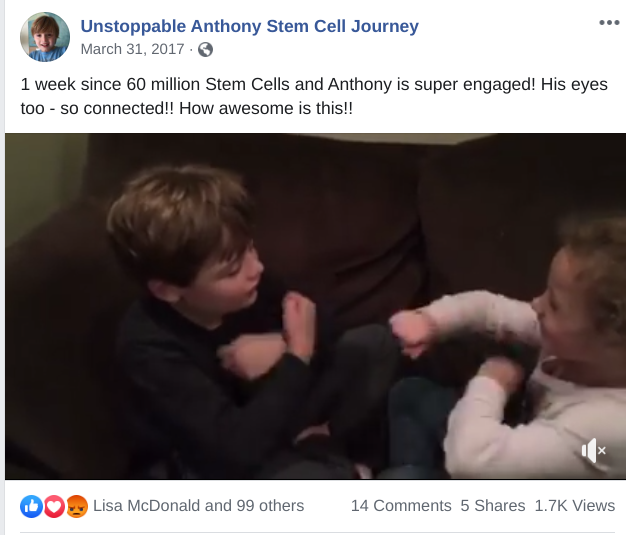

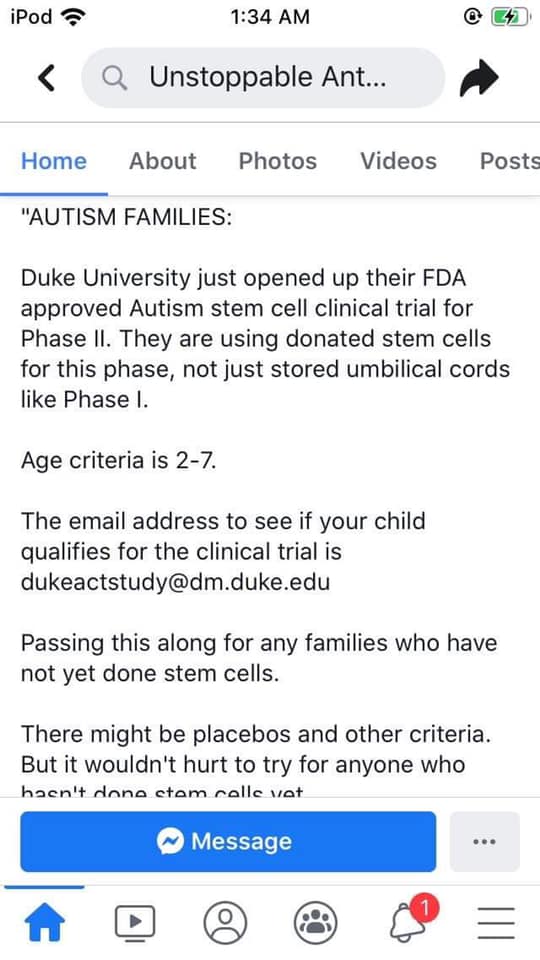

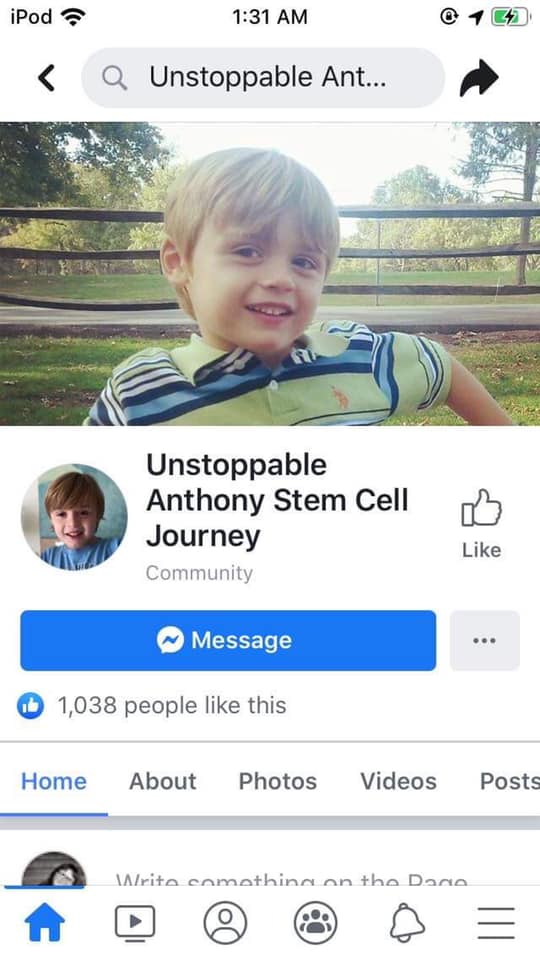

You read this right. This parent is taking their child to Panama and subjection their child to stem cell therapy to try to cure autism. This is very dangerous.
“Safety Concerns for Unproven Stem Cell Treatments
All medical treatments have benefits and risks. But unproven stem cell therapies can be particularly unsafe.
For instance, attendees at a 2016 FDA public workshop discussed several cases of severe adverse events. One patient became blind due to an injection of stem cells into the eye. Another patient received a spinal cord injection that caused the growth of a spinal tumor.
Other potential safety concerns for unproven treatments include:
- Administration site reactions,
- The ability of cells to move from placement sites and change into inappropriate cell types or multiply,
- Failure of cells to work as expected, and
- The growth of tumors.
Note: Even if stem cells are your own cells, there are still safety risks such as those noted above. In addition, if cells are manipulated after removal, there is a risk of contamination of the cells.”
Heed the FDA’s Warning. This child is in extreme danger and the parents are too blind to see it. The largest autism charity is promoting her experimenting on her child instead of helping him and accepting him.
Encouragement Against Stem Cells by the FDA
Why It is So Dangerous
Quack clinics are selling it all over the world. There are thousands of these stem cell clinics and they claim to cure everything, including autism and cerebral palsy. Sound like MMS? This is the exact claim.
The method of obtaining and transfusing stem cells is a dangerous method that depends on “bulk RNA sequencing.” This averages the gene expression among different types of cells in a single measure. This has a tendency of obscuring variations among individual cells or cell types. This can result in a partial or biased deception of gene expression in that sample. It can lead to misleading or errors in gene expression in that particular sample.
Most of these quack clinics are in the US, Mexico, India, and China. People travel from all over the world for this treatment. This is known as stem cell tourism.
In the US, several people have lost their sight after receiving stem cell treatment for degenerative eye conditions. This was at an unregulated stem cell clinic in Florida. Each patient paid up to $20,000 for a “clinical trial.”
There have been other severe harm that is associated with unregulated stem cell treatments. This includes fever, infections, tumors, brain inflammation, life-threatening blood clots, disability, and death.
How Stem Cells Work
There are different body parts that have the amazing ability to repair themselves and replace lost/damaged cells. This self-repair or regeneration is the main function of a stem cell. Stem cells have the unique ability to transform into different types of cells.
During embryonic development, stem cells are called pluripotent. This means that they can develop into any cell type in the body. As the embryo grows, stem cells become more specific and can only develop into certain cell types.
Adult stem cells are not as versatile as embryonic stem cells. Adult stem cells can only develop into cell types similar to their source. All stem cells contribute to self-healing cells and organs by releasing extracellular vesicles. They are substances stored in small lipid droplets.
Stem cells are great for medical research and treatments because they can help repair damaged tissues and organs in the body. There are thousands of legitimate clinical trials in process.
EU and UK Found a Loophole
In the EU and UK, these unethical stem cell clinical are taking advantage of a loophole. If the stem cells are not modified in any way after they are gathered and then reinserted into a person, these procedures are not covered by regulations for “advanced therapy medical products.” These are medicines based on genes, tissues, or cells.
Because of the lack of regulation, there is no safety or quality control. The effectiveness of the treatments cannot be guaranteed.
In order to entice potential “patients” that their stem cell injections work, they avoid referring to reliable scientific evidence. This may include clinical trials which is the gold standard in testing new treatments. They rely on evidence that has some medical and scientific basis but has been taken out of context,
These quack clinics will also have written testimonials or testimonial videos from people who cannot be verified. Either that or they mention celebrities who have been treated at their clinic. They use the person’s fame to make it seem like the treatment is legitimate.
Because this is not regulated, the risks of dangerous side effects and complications are very significant. This can also result in patients delaying proven treatments for a dangerous condition that they have without the supervision of their doctor.
Trial for Type 1 Diabetes
There have been promising results at Harvard Stem Cell Institute. They are using research from the Melton Lab, Vertex Pharmaceuticals has developed VX-880. This is an investigational stem cell-derived, fully differentiated pancreatic islet cell replacement therapy for people with type 1 diabetes. This is in conjunction with immunosuppressants.
There was a patient treated with a single infusion of VX-880 at half the target dose in addition to immunosuppressants. The patient was diagnosed 40 years prior to infusion and has been insulin dependent. They have achieved a successful engraftmentment and demonstrated improvements. They are increased fasting and simulated c-peptide, improvements in blood glucose control, improved A1c, and decreased insulin requirement. This shows the restoration of insulin-producing islet cells.
This is only a potential breakthrough for T1D. It is the first demonstration of embryonic stem cells. using stem cells that have been differentiated into islets to treat a patient. This returns the insulin-producing ability to type one diabetic.
“As a surgeon who has worked in the field of islet cell transplantation for decades, this approach, which obviates the need for an organ donor, could be a game changer,” said James Markmann, MD Ph.D. “We are excited to progress this unique and potentially transformative medicine through clinical trials and to patients.
“More than a decade ago our lab had a vision for developing an islet cell replacement therapy to provide a functional cure to people suffering from T1D,” said Melton, a founder and one of the first co-chairs of the Harvard Stem Cell and Regenerative Biology Department. “These promising results bring great hope that stems cell-derived, fully differentiated islet cells could deliver a life-changing therapy for people who suffer from the relentless lifelong burden of T1D. I’m so grateful that Harvard and the Harvard Stem Cell Institute have supported this work.”
New Study Shows Safer Methods for Legitimate Conditions
This new advance could lead to personalized medicine. The study took place in Darlinghurst, Australia. They have created a new technique from a large-scale study on the complex relationship between human genetics and biology.
This study was done to hopefully find an answer for spinal cord injuries, type 1 and type 2 diabetes, Parkinson’s, Alzheimer’s, cardiovascular disease, and cancer.
The study was published in the peer-reviewed Journal Nature Communications. It is predicted to revolutionize stem cell treatments affordable safe and efficient. Only for legitimate conditions.
They call it “village in a dish.” This allows the concurrent growth and analysis of stem cells from a variety of donors. This amplifies the quality of studies 100 times over.
“Our village model provides a powerful way to understand how genetic differences between people including health and disease,” said Professor Joeseph Powell. He is the director of Cellular science at the Garvan Institute and Director of the UNSW Cellular Genomics Futures Institute. “Even though we share the majority of our DNA, variations in our genes lead to unique traits and responses. The village system captures this diversity at a large scale, revealing how genetic differences between people affect the complex mechanisms underlying biology and disease.”
How this is different than the unregulated stem cell quackery
The cells in the human body have different jobs. Examples of this are nerve cells, liver cells, muscle cells, etc. Stem cells have the potential to grow into any cell type. This is why they hold such potential in treating certain types of diseases.
Professor Powell and his colleagues have created a method that involves culturing stem cells from a variety of donors in one dish and then using single-cell sequencing. This safeguarded the unique characteristics of each cell. This allows exact snapshots of the entire population.
The village-in-a-dish technique allows for more expansive studies on human organ systems normally out of reach. By generating organ-specific cells from multiple people, the need for live tissue donors is taken out of the equation. This overcomes the limitations of studying only a few individual cells.
“Medical research often relies on animal models which are not perfect physiological proxies for humans. Induced pluripotent stem cells, which can be generated from a patient blood sample, provide the complete DNA profile of the patient and then can be differentiated into almost any cell type in the human body,” said Professor Powell.
“by studying cells from many individuals at once, we can identify genetic factors that influence disease and treatment response at an unprecedented scale,” said Dr. Drew Neavin, the first author of the paper and postdoctoral scientist at Garvan.
“An example is assessing cardiac toxicity, or Lew body accumulation in Parkinson’s disease across hundreds of cell lines derived from patients. Rather than reflecting single individuals, such studies would reveal shared and distinct responses among genetic groups. The insights could then inform clinical trials by preselecting patient populations likely to benefit. Overall, this approach could transform our ability to translate stem cell science into precision treatments.”
Sources:
https://studyfinds.org/personalized-medicine-stem-cell/
https://hsci.harvard.edu/news/new-therapy-treating-type-1-diabetes


 Aviva Seigler
6 thoughts on “Quackery exposed: stem cell therapy”